
French school protests cause hundreds of partial shutdowns
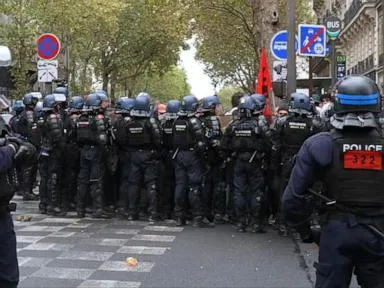
More than a quarter-million people are taking to the streets across France, demanding more resources for schools they say are underfunded. This massive wave of civil unrest has left hundreds of educational institutions facing partial shutdowns as teachers and students join the movement. Protesters argue that the current budget fails to meet the growing needs of students and staff alike. As the demonstrations continue to grow in scale, the government faces increasing pressure to address these systemic financial gaps and provide the necessary support for the country's future generations.
Why are hundreds of schools in France facing partial shutdowns?
Hundreds of schools are experiencing partial shutdowns this week as a direct consequence of widespread industrial action and protests across France. The disruptions are not isolated incidents but part of a coordinated movement aimed at highlighting systemic issues within the French educational infrastructure. According to reports from ABC News, the scale of the unrest has reached a point where significant portions of the school day or specific academic levels are being affected by the strikes.
The shutdowns are primarily driven by the refusal of staff to maintain normal operations while their demands remain unmet. This tactical approach to protesting ensures that the impact on the daily lives of students and parents is felt immediately, thereby increasing the pressure on government officials to negotiate. The partial nature of the closures suggests a targeted strike pattern, often involving specific sectors of the teaching workforce or specific regional school districts.
The mechanics of the school shutdowns
The shutdowns often manifest as 'days of action' where specific groups of educators or support staff abstain from work. This can lead to classrooms being left unattended or the cancellation of extracurricular activities, creating a fragmented learning environment. For parents, this necessitates sudden adjustments to childcare and supervision, further amplifying the social visibility of the protest.
These disruptions are not merely administrative inconveniences; they represent a fundamental breakdown in the standard delivery of educational services. When teachers and staff participate in these industrial actions, the resulting gaps in the school day can leave entire cohorts of students without consistent instruction. This fragmentation is a core component of the protest strategy, designed to demonstrate that the current state of school funding is unsustainable for both the providers of education and the recipients.
What are the primary drivers behind the French school protests?
The central motivation for the protests is the demand for significantly more resources for schools that demonstrators claim are chronically underfunded. Protesters argue that the current budgetary allocations are insufficient to meet the modern needs of the French education system, affecting everything from classroom technology to basic facility maintenance.
Beyond pure financial figures, the protests are fueled by several key grievances:
- Working Conditions: Teachers and staff are calling for improved professional environments and better support structures to manage growing classroom complexities.
- Resource Allocation: There is a perceived gap between the needs of the students and the tools provided by the state, including textbooks, digital resources, and staffing levels.
- Systemic Underfunding: Labor unions argue that the long-term trend of educational spending does not align with the evolving requirements of a 21st-century curriculum.
These issues have unified a diverse group of stakeholders, including students who feel the quality of their education is at risk, and teachers who feel undervalued and unsupported in their roles. The core of the argument rests on the belief that the current level of investment is failing to keep pace with the actual requirements of a functioning national education system.
Who is participating in the demonstrations in Paris?
The demonstrations in Paris have seen a massive turnout, with more than 250,000 people participating in the marches. This large-scale mobilization is characterized by a broad coalition of different social groups within the education sector.
The participants include:
- Teachers and Educators: The backbone of the protest, seeking better pay, better conditions, and more classroom autonomy.
- Students: Younger generations participating in marches to advocate for the future of their own learning environments.
- Labour Unions: Organising the logistics of the strikes and providing the political weight necessary to demand government attention.
The presence of these groups in the streets of Paris serves as a powerful visual representation of the widespread discontent. By marching together, these groups demonstrate that the issues of school funding are not merely professional disputes for teachers, but societal concerns that affect the entire national community. The sheer volume of participants—exceeding a quarter-million—underscores the depth of the sentiment across different demographics.
What is the impact of these protests on the French education system?
The immediate impact of the protests is the disruption of the academic calendar and the interruption of learning for thousands of students. As hundreds of schools undergo partial shutdowns, the continuity of education is compromised, which can have long-term effects on student progress and curriculum delivery.
However, the impact extends beyond the classroom. The protests are forcing a national conversation on the role of the state in funding public services. The tension between the government's budgetary constraints and the protesters' demands for increased spending creates a political deadlock that can take months or even years to resolve. The ongoing nature of these demonstrations suggests that unless significant concessions are made regarding school resources, the educational system may face continued instability throughout the academic year.
Furthermore, the social impact of these protests creates a ripple effect throughout French society. As parents struggle to manage the sudden lack of school availability, the friction between the state and its citizens intensifies. This widespread disruption serves as a constant reminder to policymakers of the growing dissatisfaction within the education sector.
Frequently asked questions
How many people are participating in the protests?
More than a quarter-million people have taken to the streets across France to participate in the demonstrations. This massive scale of participation highlights the widespread nature of the discontent regarding school funding and the conditions within the educational system.
What is the main reason for the school shutdowns?
The shutdowns are a result of protests and industrial action by teachers, students, and labour unions. They are demanding increased resources and better funding for schools, which they argue are currently underfunded and inadequately equipped to meet student needs.
Where are the protests most visible?
While the protests are occurring across the country, they are particularly visible in Paris, where large-scale marches involving hundreds of thousands of people have taken place to demand changes to the education system.
Who is involved in the demonstrations?
The protests involve a broad coalition of stakeholders, including teachers, students, and various labour unions. This collective action aims to present a unified front against the perceived lack of investment in the French national education system.
Will the school closures be permanent?
The current shutdowns are described as partial and are part of ongoing protest actions. Whether these disruptions become more frequent or permanent depends on the outcome of negotiations between the protesting groups and the government regarding school resources.
Key takeaways
- Over 250,000 people are participating in nationwide protests across France.
- Hundreds of schools are facing partial shutdowns due to industrial action.
- The primary demand is for increased resources and better funding for schools.
- The protests involve a coalition of teachers, students, and labour unions.
Conclusion
The French school protests represent a significant moment of social unrest driven by deep-seated concerns over the future of public education. With over 250,000 participants demanding better funding and resources, the scale of the movement is impossible for the government to ignore. While the immediate consequence is the disruption of learning through school shutdowns, the broader implication is a fundamental debate over the state's commitment to its educational institutions. The resolution of this conflict will likely determine the stability of the French school system for the foreseeable future.
VIsit Middle East