
A License Plate Tracking Cameras Lawsuit Over Theft
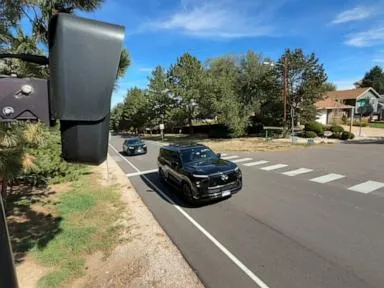
A legal challenge is rising against the use of automated surveillance after a woman was incorrectly identified as a thief through license plate tracking data. The incident occurred when law enforcement used automated systems to misidentify her vehicle, leading to a wrongful accusation of package theft. This error has sparked a significant debate regarding the accuracy of modern surveillance technology and the potential for privacy violations. As the legal proceedings move forward, many are questioning whether these automated tools provide reliable evidence or simply create new avenues for systemic injustice and wrongful accusations.
What triggered the license plate tracking cameras lawsuit?
The lawsuit stems from a wrongful accusation of package theft involving a woman who was targeted due to data retrieved from police surveillance systems. According to ABC News, the plaintiff alleges that law enforcement officials used license plate tracking information to incorrectly link her vehicle to a crime scene. This error led to direct accusations of theft, prompting the legal challenge against the methods used to gather and interpret such data.
The core of the legal argument rests on the reliability of the automated systems used by police. When a vehicle is identified via tracking technology, it creates a digital trail that law enforcement uses to build a profile of movement and location. In this specific instance, the technology provided a lead that investigators acted upon, but the information proved to be inaccurate in identifying the actual perpetrator of the package theft. The lawsuit questions whether the reliance on these digital breadcrumbs is sufficient to justify police intervention and accusation.
The mechanics of the false accusation
The incident highlights a critical failure in the verification process. While the cameras may accurately record a plate number, the subsequent investigation failed to account for variables such as vehicle theft, shared vehicle use, or simple data errors. The plaintiff's legal team suggests that the reliance on automated data without sufficient corroborating evidence led to the wrongful targeting of an innocent citizen.
In cases of package theft, where timing and location are paramount, investigators often lean heavily on the timestamps provided by Automated License Plate Recognition (ALPR). However, as this case demonstrates, a plate being present in an area does not inherently prove the driver was the individual committing the crime. The failure to cross-reference the digital data with other forms of evidence—such as eyewitness accounts or direct video of the person involved—allowed the error to escalate into a formal accusation.
How does license plate tracking technology work?
Automated License Plate Recognition (ALPR) technology uses high-speed cameras and optical character recognition (OCR) to capture and log vehicle identifiers. These systems are often mounted on patrol cars, stationary poles, or integrated into existing traffic camera networks. Once a plate is captured, the software converts the image into text data, which is then timestamped and geo-tagged.
This data is typically stored in databases that can be queried by law enforcement to track the historical movements of specific vehicles. The efficiency of this technology allows police to scan thousands of plates per hour, providing a massive dataset that can be used to map criminal patterns or locate suspects. However, the sheer volume of data collected often outpaces the ability of human investigators to verify the context of each scan. This creates a high-speed environment where a single misread character or a timestamp error can trigger a chain of events leading to a wrongful investigation.
What are the privacy concerns regarding ALPR data?
The primary concern regarding license plate tracking is the creation of a persistent surveillance web that tracks law-abiding citizens without suspicion. Privacy advocates argue that the continuous collection of location data constitutes a violation of the expectation of privacy in one's movements. Because these cameras are often automated and ubiquitous, they can record the presence of an individual at specific locations, such as medical clinics, places of worship, or political gatherings.
Furthermore, the storage and security of this data present significant risks. If police databases containing historical movement patterns are breached or misused, the sensitive information regarding where individuals live, work, and spend their time could be exposed. The lawsuit in question seeks to address whether the use of such invasive technology is justified when it results in the misidentification of citizens. The central question remains: at what point does the pursuit of efficiency through automation infringe upon the fundamental right to move freely without being constantly logged by the state?
What is the impact of surveillance errors on individuals?
Wrongful accusations driven by technological errors can have profound social and psychological consequences for the accused. Beyond the immediate stress of being investigated for a crime like package theft, individuals may face reputational damage, legal costs, and increased scrutiny from law enforcement. The error in this case demonstrates how a digital mistake can manifest as a real-world confrontation with the state.
The legal system is currently grappling with how to provide recourse for those caught in the crosshairs of automated errors. As law enforcement agencies increasingly integrate artificial intelligence and automated tracking into their daily operations, the threshold for what constitutes 'reasonable suspicion' is being tested. This lawsuit serves as a potential precedent for how courts will treat errors generated by automated surveillance systems. If the court finds that the reliance on ALPR data alone was insufficient to warrant the accusation, it could force a significant change in how police verify automated leads.
How are law enforcement agencies defending the use of tracking cameras?
Law enforcement agencies generally defend the use of license plate tracking as a vital tool for public safety and crime prevention. They argue that the technology allows for the rapid identification of stolen vehicles, the tracking of suspects in violent crimes, and the recovery of property. From a tactical perspective, ALPR provides a level of coverage that manual patrolling simply cannot match.
Proponents of the technology suggest that the benefits to community safety outweigh the potential for individual privacy infringements. They often point to successful cases where tracking data has led to the apprehension of dangerous criminals or the solving of complex cases. However, the tension remains: how can agencies balance the efficiency of automated tools with the necessity of protecting the civil liberties of the general population? The defense typically rests on the idea that technology is merely a starting point for investigation, rather than a final determination of guilt, though the case of the package theft accusation suggests that the line between a 'lead' and an 'accusation' can become dangerously blurred.
Key takeaways
FAQ: License plate tracking cameras lawsuit
Why is the woman suing the police?
The woman is suing because she was wrongly accused of package theft. The accusation was based on data retrieved from license plate tracking cameras, which the plaintiff claims led to an incorrect identification and subsequent harassment by law enforcement officials.
What is ALPR technology?
ALPR, or Automated License Plate Recognition, is a technology that uses specialized cameras and software to automatically capture, read, and log vehicle license plate numbers. This data is often stored in databases for law enforcement to track vehicle movements and patterns.
Does license plate tracking violate privacy?
Privacy advocates argue that it does, as the technology can create a detailed history of an individual's movements. This constant monitoring of vehicles can track people to sensitive locations, raising concerns about mass surveillance and the loss of anonymity in public spaces.
Can ALPR data be inaccurate?
Yes, ALPR data can be inaccurate due to technical errors, poor image quality, or incorrect interpretations by the software. Furthermore, the data may correctly identify a plate but incorrectly imply the driver's involvement in a crime, such as in cases of vehicle theft.
How do police defend using these cameras?
Police defend the technology by stating it is a critical tool for public safety. They argue it helps in locating stolen vehicles, tracking suspects, and increasing the efficiency of criminal investigations, ultimately contributing to safer communities through rapid data retrieval.
Conclusion
The lawsuit involving license plate tracking cameras serves as a critical touchstone for the ongoing debate over surveillance in the digital age. While law enforcement views Automated License Plate Recognition as an indispensable tool for modern policing, the incident of wrongful accusation highlights the inherent risks of automated error. As technology continues to evolve, the legal system must determine the boundaries of state surveillance to ensure that the pursuit of public safety does not come at the expense of fundamental privacy rights and individual justice.
VIsit Middle East