
Grandmother planking world record: 61-year-old breaks her own feat
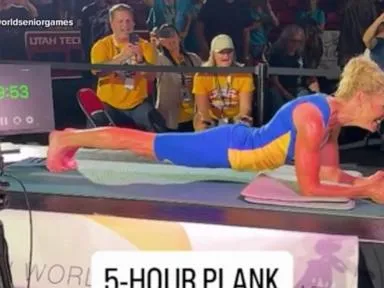
A remarkable 61-year-old grandmother of 12 has officially achieved a new milestone by surpassing her own existing Guinness World Record for the planking challenge. This incredible feat demonstrates her extraordinary physical endurance and mental fortitude at an age when many begin to slow down. By pushing her body to its absolute limits, she has proven that age is truly no barrier to achieving elite fitness levels. Her dedication to this core strength discipline serves as a massive inspiration to people of all ages worldwide, showing that consistency and grit can lead to historic success.
How did the grandmother break her planking record?
The 61-year-old grandmother achieved a new milestone by surpassing her own existing Guinness World Record for the planking challenge. While the specific duration of the new record was not detailed in the immediate report, the achievement marks a significant personal and competitive triumph. Having already established herself as a record holder, her ability to improve upon her own time demonstrates sustained physical conditioning and mental discipline that is rare even among younger athletes.
The feat is particularly notable given her personal circumstances as a grandmother of 12 children, suggesting a complex balance between family life and rigorous physical training. Breaking a record that one previously held is a difficult occurrence in competitive fitness, as it requires overcoming the psychological and physical plateau that often accompanies elite-level performance. Her success highlights a unique intersection of significant family responsibility and individual athletic pursuit, proving that personal goals can thrive alongside domestic roles.
The mechanics of the planking challenge
Planking is an isometric core strength exercise that requires the individual to maintain a position similar to a push-up, either propped on elbows or hands, while keeping the body in a straight line. The challenge lies in the sustained tension required in the abdominal, back, and shoulder muscles to prevent the hips from sagging or rising. For a record-breaking attempt, the duration can extend into many minutes, testing the absolute limits of muscular endurance and respiratory control.
In a competitive setting, the technical requirements are stringent. Maintaining a perfectly straight line from head to heels is essential to ensure the validity of the attempt. Any deviation, such as an arched back or elevated hips, can lead to disqualification. This makes the planking challenge as much a test of technical precision as it is a test of raw physical stamina. The athlete must fight against the body's natural urge to drop or compensate for fatigue, making it a high-stakes exercise in body control.
What is the significance of a Guinness World Record in this context?
Securing a Guinness World Record provides official global recognition for individual physical achievements. For the grandmother, the record serves as a validated testament to her endurance capabilities. Guinness World Records acts as the definitive authority for such feats, ensuring that the timing, technique, and conditions of the attempt meet strict international standards. This official stamp of approval elevates the achievement from a personal fitness milestone to a documented piece of human history.
Beyond the official title, such records often serve as a source of inspiration for others. In the case of a 61-year-old participant, the achievement challenges conventional perceptions regarding age and physical capability. It shifts the narrative from what is expected of seniors to what is possible through dedicated practice and discipline. The official verification process provides a level of prestige that distinguishes a mere fitness milestone from a globally recognized feat of human potential, offering a blueprint for how others might approach their own physical limits.
Why does planking matter for physical health and endurance?
Planking is widely recognised by fitness professionals for its ability to strengthen the entire core, which is essential for posture, balance, and spinal stability. Unlike dynamic exercises that involve movement, the static nature of the plank requires the body to resist gravity through constant muscular contraction. This builds deep-seated strength that supports the entire musculoskeletal system, providing a foundation for other physical activities.
For older adults, maintaining core strength is a critical component of functional fitness. A strong core helps in preventing falls, improving walking stability, and reducing the risk of lower back pain. While the grandmother's attempt was focused on a competitive record, the underlying exercise provides significant health benefits that are applicable to a much broader demographic, emphasizing the importance of isometric training for long-term mobility and independence in later life.
Core stability and ageing
As individuals age, the risk of muscle atrophy and reduced bone density increases. Engaging in isometric exercises like planking can help mitigate some of these effects by maintaining muscle tone and supporting the musculoskeletal system. The grandmother's success suggests that high-level endurance training is achievable well into one's sixties, provided there is a structured approach to fitness and a commitment to consistency.
This achievement serves as a biological counter-narrative to the idea that physical decline is inevitable. By successfully pushing her body to its limits, she demonstrates that the capacity for strength and endurance can be cultivated and even improved throughout the aging process. This has profound implications for how aging populations approach physical activity and long-term wellness, suggesting that the window for physical improvement remains open much longer than traditional stereotypes suggest.
What are the challenges of maintaining record-breaking fitness?
Maintaining the level of fitness required to break world records involves significant dedication and consistency. For an individual with a large family, such as a grandmother of 12, time management becomes a primary obstacle. The physical toll of high-intensity endurance training also requires careful recovery periods to avoid injury, which can be more difficult to manage as one ages.
Furthermore, the psychological aspect of record-breaking cannot be understated. The pressure to improve upon a previously held record can be immense, as the athlete is essentially competing against their own past performance. This requires a high degree of mental fortitude to push through the discomfort that occurs during the final stages of an endurance attempt. The mental battle against the urge to quit is often as significant as the physical struggle against muscle fatigue, requiring a level of grit that matches the physical exertion.
Frequently asked questions
What is the planking challenge?
The planking challenge is a fitness feat where an individual holds a plank position for as long as possible. It tests core strength, muscular endurance, and mental discipline. Achieving a Guinness World Record in this category requires adhering to strict official guidelines and maintaining perfect form.
How old was the grandmother when she broke the record?
The grandmother was 61 years old at the time of her record-breaking achievement. Her success is noted for demonstrating that significant physical endurance and world-class fitness levels are attainable even in later stages of life.
Is planking a difficult exercise?
Yes, planking is considered a challenging isometric exercise. While it can be modified for beginners, performing it at a world-record level requires exceptional core stability, shoulder strength, and the ability to endure prolonged muscular fatigue without breaking form.
Does Guinness World Records verify these feats?
Guinness World Records provides the official verification for such achievements. They implement specific protocols to ensure that the attempt is conducted under controlled conditions, with accurate timing and adherence to the technical requirements of the specific category.
How many children does the record holder have?
The grandmother who broke the planking record is a grandmother to 12 children. This detail highlights her ability to balance significant personal fitness goals with extensive family responsibilities.
Key takeaways
- A 61-year-old grandmother has broken her own Guinness World Record for planking.
- The record holder is a grandmother of 12 children.
- Planking is an isometric core exercise requiring significant muscular endurance.
- The achievement highlights the potential for high-level fitness in older age groups.
Conclusion
The achievement of this 61-year-old grandmother marks a notable moment in the realm of endurance fitness. By breaking her own Guinness World Record, she has demonstrated that age is not a barrier to elite physical performance. Her success underscores the importance of core strength and mental resilience, providing an inspirational example of how dedicated training can lead to extraordinary results. As she continues to push the boundaries of what is possible, her story serves as a powerful reminder of the capabilities of the human body across different stages of life, proving that with discipline, even the most established records can be surpassed.
VIsit Middle East